
اسْتَغْفِرُوا رَبَّكُمْ إِنَّهُ كَانَ غَفَّارًا
Reading tools
20px
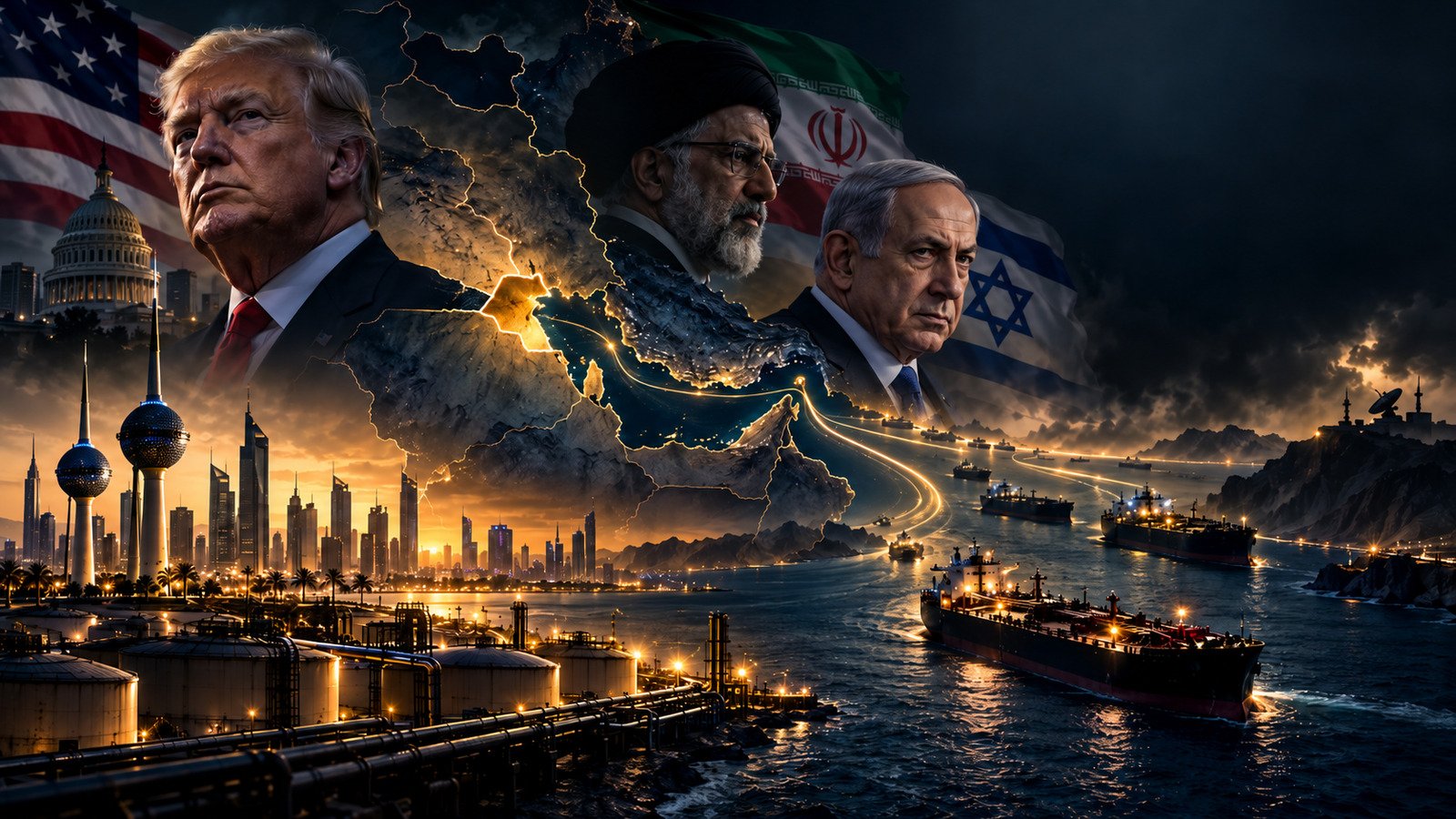
The countdown has begun—but for whom? The regime in Tehran… or Netanyahu?
In politics, the struggle revolves around who stays and who goes. The economist, however, asks a different question:
Who pays the bill?
A new regional order is not shaped by political speeches alone. Its contours are defined by budgets, trade routes and energy export corridors.
In Tehran, the dollar has surpassed 2.5 million rials, while inflation approached 90 percent year-on-year in September. Iranian oil exports fell to zero during the same month under the weight of U.S. sanctions.
Yet besieged regimes do not necessarily collapse when their resources are depleted. Sanctions can impoverish populations before they bring down governments.
In Israel, Netanyahu has made the overthrow of the Iranian regime an openly declared objective and has pledged to bring it about. At the same time, he faces elections on October 27, with most polls showing Eisenkot's party in the lead but no guaranteed majority for either camp.
Washington, meanwhile, has announced that it will not launch new attacks on Iran before the U.S. congressional midterm elections on November 3. Electoral calculations may delay escalation, but they do not eliminate the possibility.
In the Gulf, however, the heaviest bill is being paid.
For nearly eight months, the Strait of Hormuz has experienced unprecedented disruption, ranging from suspended navigation to the partial resumption of exports under protection, while the threat has extended from oil tankers to communications cables.
Brent crude has exceeded $116 a barrel, but a higher price offers little benefit to a producer whose ability to export is constrained.
The International Monetary Fund expects Kuwait's economy to contract by 16.7 percent in 2026 and Qatar's by 15.6 percent, while Oman retains a positive growth outlook and benefits from having its principal ports located outside the Strait.
At this point, geography shifts from an advantage to a cost.
Saudi Arabia relies on the East-West Pipeline to reach Yanbu, while the United Arab Emirates is accelerating the construction of a second pipeline to Fujairah to expand its capacity to export oil without relying on Hormuz.
Kuwait, by contrast, still has no alternative export pipeline that bypasses the Strait. Proposed connections through Saudi Arabia and the UAE remain at the study stage, while oil revenues account for around four-fifths of government budget revenues.
The issue is therefore not simply one of constructing a pipeline. It is about redefining Kuwait's economic security through diversified export routes, strategic reserves outside the Strait and faster diversification of public revenues.
Dependence on a single market is a risk. Dependence on a single export route is an even greater risk when the state budget becomes tied to whether a tanker can pass through a troubled waterway.
The question, then, is not who falls first in Tehran or Tel Aviv. The real question is where Kuwait will stand when the region's energy and trade map is redrawn.
Will it remain hostage to a single strait, or become a partner in building the new routes?
Alternative outlets, strategic reserves outside the Strait, and revenues that do not depend on passing through it… this is the countdown that matters to us.
Dr. Khaled Mubarak Al-Dalk